
Traceability of NDT Findings: From the Field to the Decision
From an NDT finding to a traceable decision: How to connect field data, GIS, and integrity management
The challenge doesn’t end when an indication is detected. It begins when that information must be transmitted from the field, retain its context, and lead to a technical decision that can be reconstructed later.
Non-destructive testing (NDT) provides key information about the condition of assets. But between the time a finding is recorded and the time someone decides to re-inspect, monitor, take action, or close out an issue, there is a process during which the information can become fragmented.
The problem arises when, months later, someone needs to answer the following questions: What was found? Where? In which asset? What evidence is there? What happened next? Who was held responsible? What is the current status?
If reconstructing the response depends on searching multiple sources or finding the person who was in the field, there is a traceability gap.
An NDT finding doesn’t end when it’s detected. Its value depends on our ability to track its history.
FIELD → CONTEXT → GEOREFERENCING → CENTRALIZATION → MONITORING → DECISION
The goal is not to generate more data. It is to prevent the finding from losing its meaning as it moves from one stage to the next.
Field and office: the first point where traceability can be lost.
An inspector can fully understand what he or she has just found because the asset is right in front of them, they are familiar with the area being inspected, and they remember the working conditions. But that advantage disappears once the information leaves the field. For the next user, the finding will be as clear as the record allows.
A useful record should link the asset, component, location, date, technique used, finding identification, evidence, and other data defined by the organization’s procedures. The digital transformation of NDT is moving precisely from isolated digital results toward workflows capable of exchanging information between devices, management systems, and other industrial platforms. ASNT identifies data integration and exchange as part of this evolution in NDT/NDE.
Checkpoint 01 ·
NDT Findings Traceability Record: 10 Minimum Data Points
Select a recent finding and check whether it contains the minimum information needed to continue your journey without relying on additional explanations.
Go to the NDT Data Sheet »Georeferencing: Identifying a find also means knowing where it is.
When dealing with geographically distributed assets, knowing about an anomaly without knowing its exact location limits the ability to correlate it, locate it again, or relate it to other data. That’s where georeferencing comes in.
TECNA ICE uses GPS/GNSS surveys to link technical findings, NDT data, and corrosion studies to geographic locations and facilitate their integration into GIS systems. Its methodology also incorporates asset metadata to populate integrity and risk management databases.
But there is an important difference. Locating the finding answers the question: Where is it? Integrity management must continue: What does it mean, what happened next, and what decision does it require? That is why GIS can be a part of the journey, but not necessarily the final destination of the information.
Centralization: Having digital data does not mean having a single narrative.
Here lies one of the most overlooked problems in technical information management.
The problem isn’t using different tools. Many of them serve different and necessary functions. The gap arises when each one retains only part of the story and there is no clear connection between them.
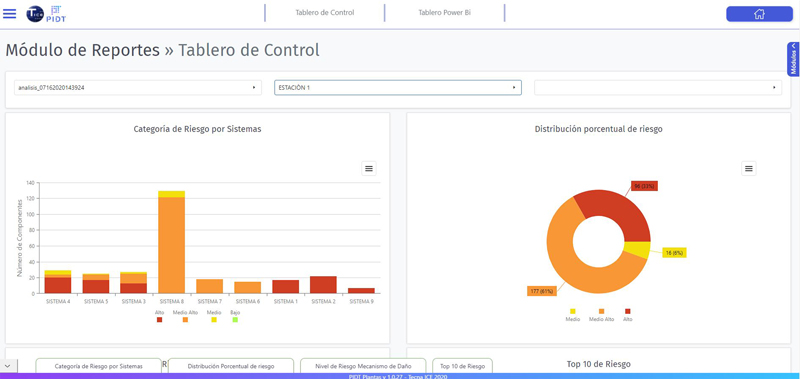
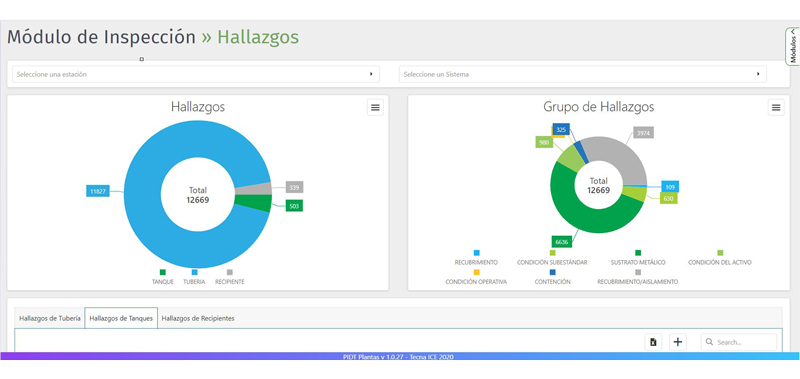
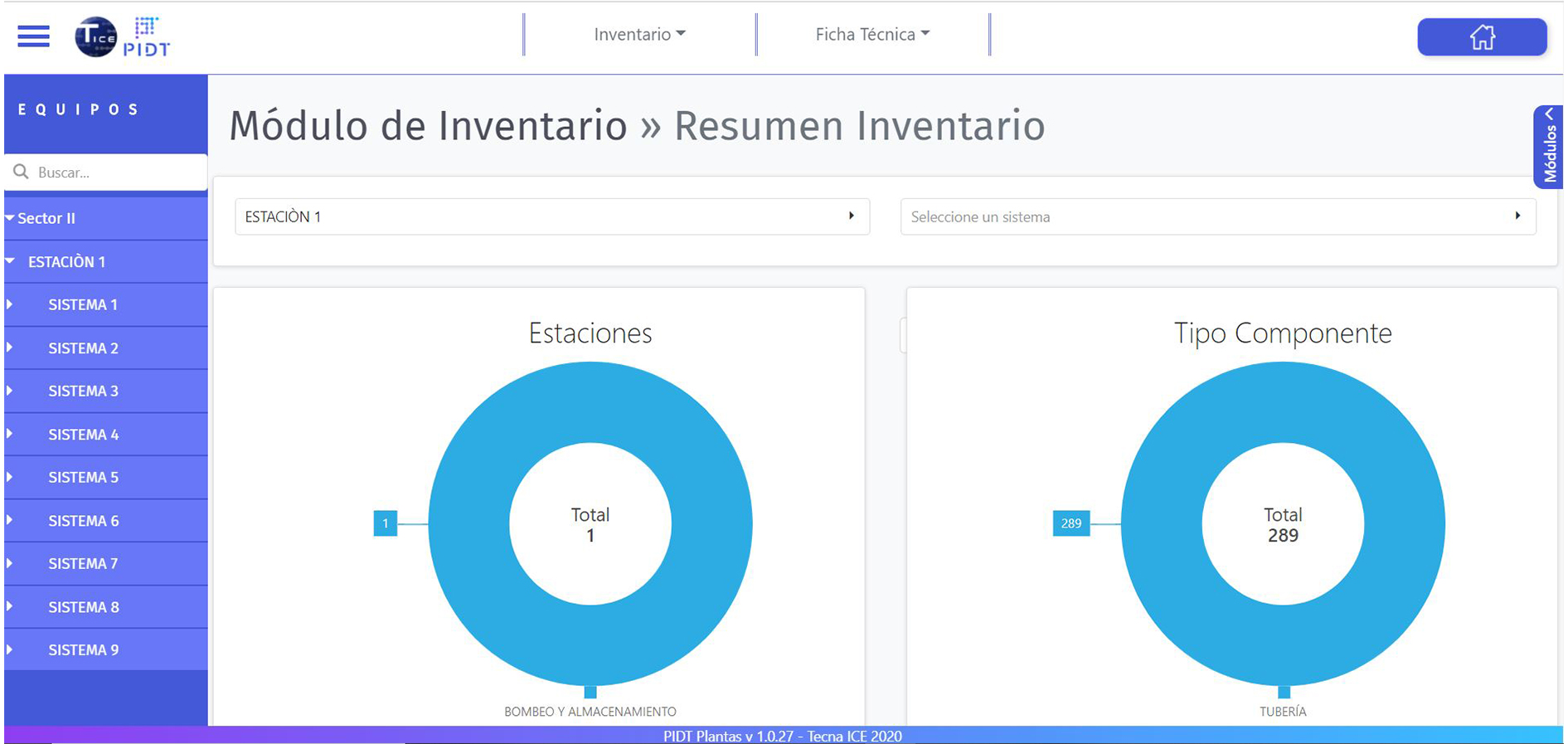
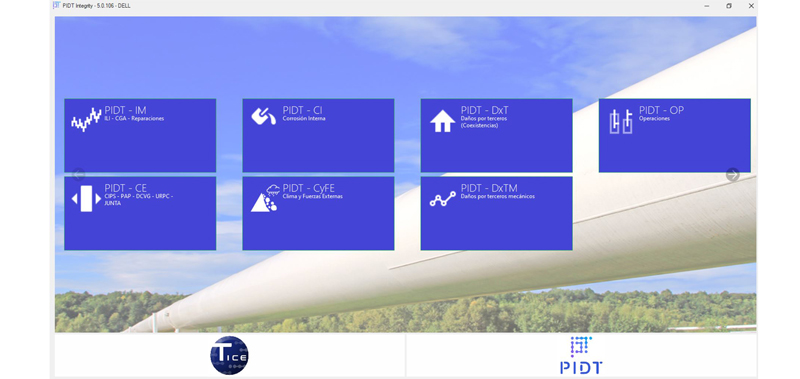
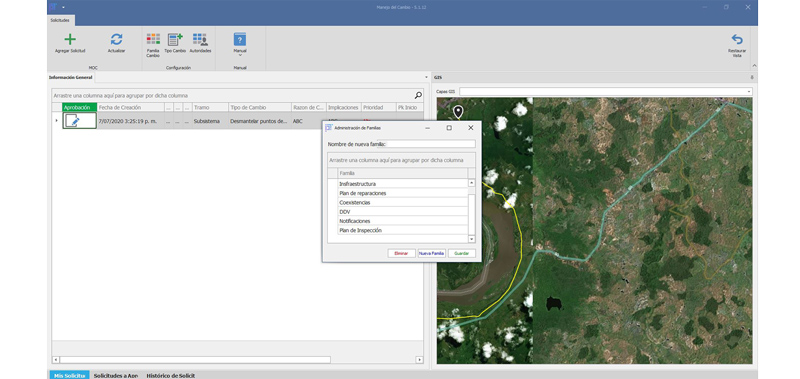
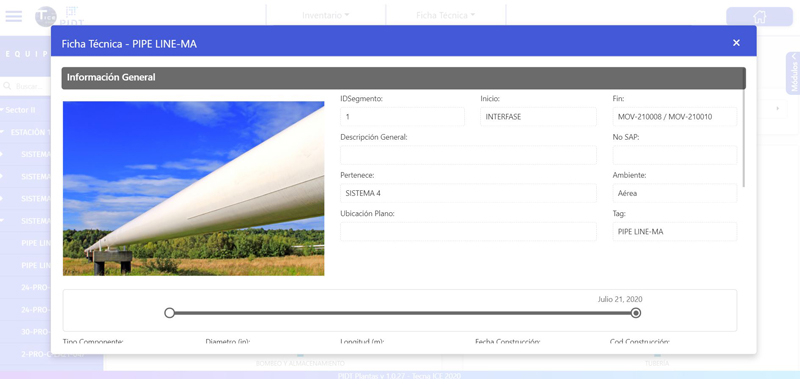
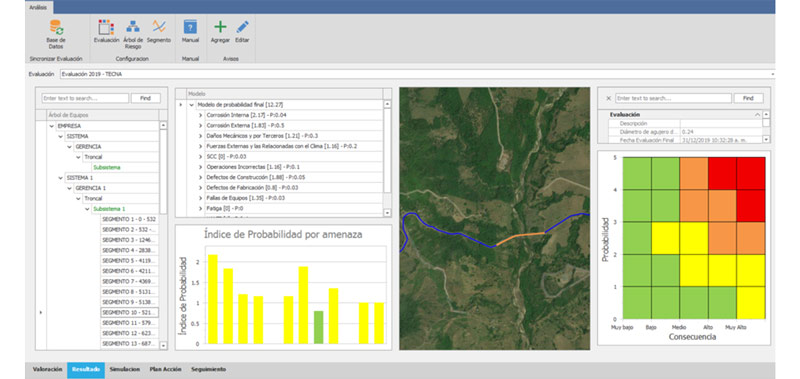
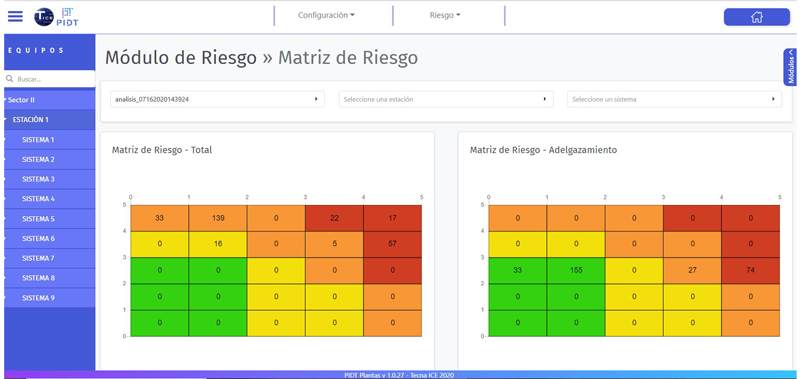
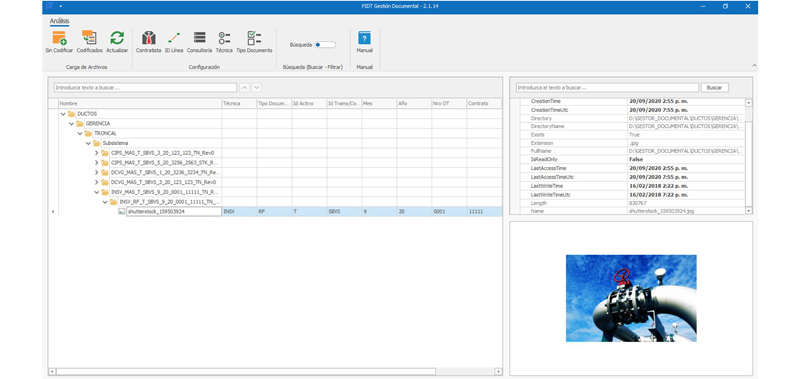
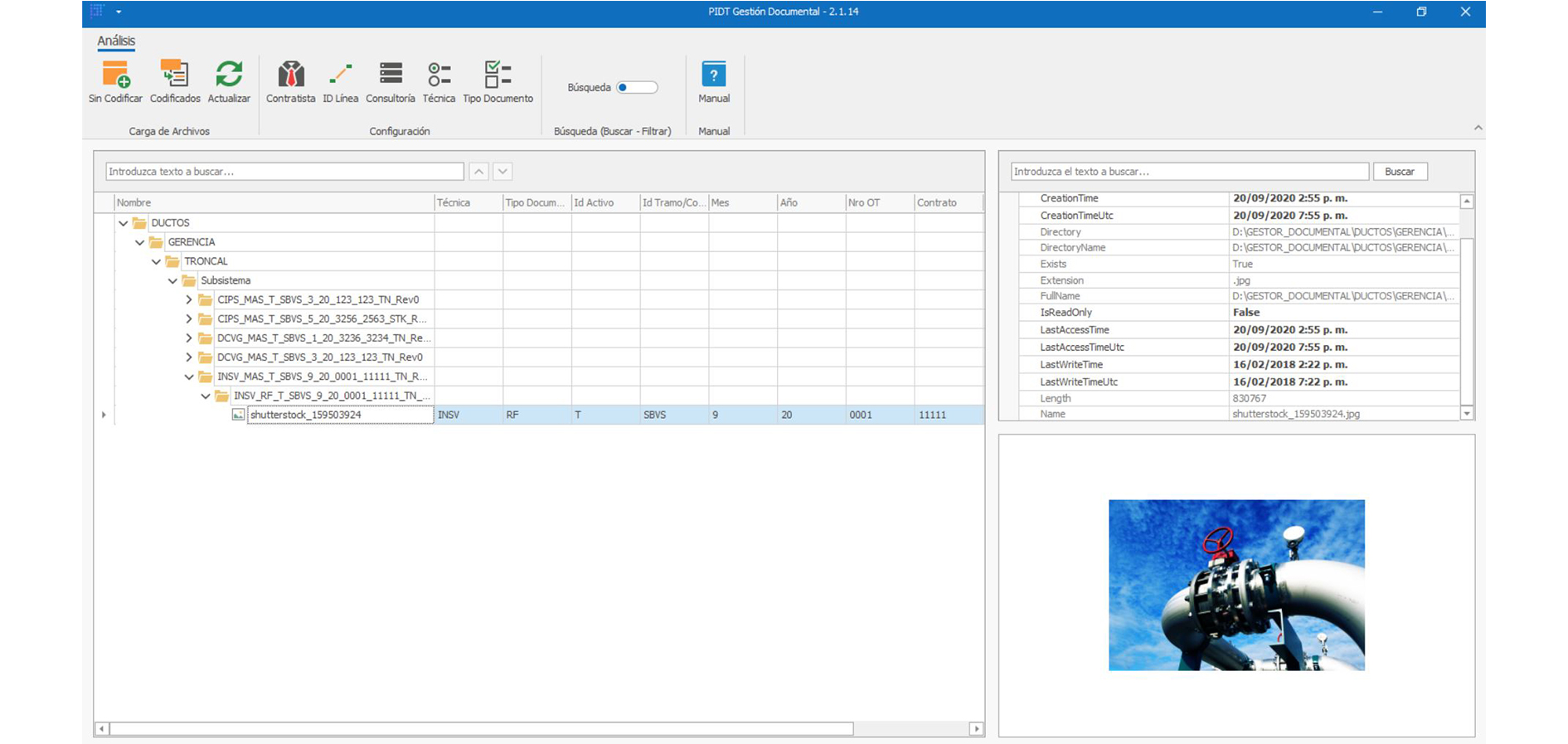
ISO 55001:2024 specifically reinforced the role of data and information within asset management systems and included a specific section on decision-making and value creation. TECNA ICE proposes PIDT based on this same logic of integration: centralizing inspections, reports, actions, and risks to support documented technical decisions, as well as specific tools for document management and asset lifecycle information.
Follow-up: Finding a finding does not mean being able to explain what happened to it.
Let’s assume we can already pinpoint the discovery. We have the inspection report. We have the evidence. We have the coordinates. Now an even more important question arises: What happened next?
A traceable system should make it possible to trace the path from the technical result to its subsequent management.
| Traceability Element | Can it be retrieved? |
|---|---|
| Finding and identification | ✓ |
| Related asset | ✓ |
| Location | ✓ |
| NDT evidence | ✓ |
| History | ✓ |
| Responsible person | ? |
| Defined action | ? |
| Current status | ? |
| Closure evidence | ? |
It is the final questions that transform technical records into management information. TECNA ICE presents its PIDT platform precisely as a tool for integrating integrity and risk information and, in the case of pipelines, centralizing ILI and NDT data.
The Five-Minute Test
There’s a simple way to determine whether traceability actually works. Select a finding from six months ago. Try to reconstruct the following: what was found → where → on which asset → what evidence was documented → who was notified → what action was taken → what its current status is.
Now add a condition: do it in less than five minutes.
If you need to open several folders, compare spreadsheets, check emails, and ask different people, the organization probably does have the information. What it may not have is a coherent narrative of the discovery.
How mature is your traceability system?
Not all organizations are at the same stage or need exactly the same technology architecture. But they can assess how easily their information flows today.
Fragmented
Information is distributed among files, tools, and people.
Centralized
Data is concentrated, but some relationships are still hard to reconstruct.
Connected
Finding, asset, location, evidence, responsible person, and action can be related.
Traceable
The lifecycle can be reconstructed from finding capture to its follow-up and decision.
This scale serves as a practical reference, not as a certification.
From field data to a decision that can be explained
Digitizing a report does not guarantee traceability. Neither does georeferencing a finding. Nor does centralizing files, on its own.
Value emerges when we are able to maintain the entire sequence: discovery → asset → location → context → history → action → decision.
The key question, then, is no longer “Do we have the data?” but rather “Can we track it from the field all the way to the decision and then reconstruct what happened?”
When the answer is yes, the NDT result ceases to function as an isolated record and begins to be truly integrated into asset integrity management.
Access our Tecna-Ice Practical Findings Traceability Kit
Sources
- ASNT — NDE Outlook: Informatization of NDT and NDE
- ISO — ISO 55001:2024 — Asset Management
- TECNA ICE — GPS Survey
- TECNA ICE — Integrity Management
- TECNA ICE — PIDT Software
Did you find this content helpful?
Subscribe to receive technical articles, updates, and more in your inbox.
Are you looking for NDT solutions?
Explore our specialized inspection services.