Strategic Consulting

Technical engineering guidelines for extending the service life of your infrastructure, validating internal inspection (ILI) anomalies, and prioritizing operational interventions in accordance with ASME, API, and NACE/AMPP standards.

Validation of Internal Inspection (ILI) Anomalies

Engineering guidelines for field verification, failure pressure calculation, and statistical validation of smart PIG runs.

Volumetric Integrity and Structural Analysis

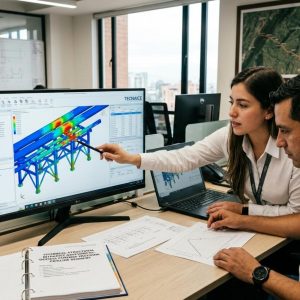
Finite element modeling and stress analysis of pipes and vessels for the accurate determination of fitness for service.

Prioritization Based on Operational Risk

Rigorous delineation of High-Consequence Areas (HCAs) to direct the maintenance budget toward the most vulnerable segments.

Alignment with ASME/API/AMPP Standards

Technical modeling in accordance with ASME B31.8S, API 580/581, and NACE SP0169 codes to ensure regulatory compliance and operational safety.

Specialized Services in Strategic Integrity Consulting

We design comprehensive management programs for pipelines, tanks, and processing facilities, optimizing decision-making through internationally recognized advanced engineering methodologies.

Certified Experience

More than 25 years of technical experience in Oil & Gas and energy across 6 Latin American countries.

Certificaciones empresa TECNA ICE
Experiencia en Evaluación y Mitigación de interferencias eléctricas en ductos | Tecnaice.
Years of experience in this service
+ 1
Projects executed
+ 1
Km of CIPS inspections
+ 1
Incident-free assessments
+ 1 mill h/m

Our consulting firm does not provide generic, theoretical recommendations; we offer root-cause analyses, in-service suitability assessments, and clear resource prioritization that enable operations and integrity managers to make decisions with absolute technical certainty and environmental responsibility.

Frequently Asked Questions

This is a quantitative engineering assessment that determines whether equipment with a detected defect (corrosion, dent, lamination) remains safe to operate under its current design conditions without requiring immediate repair.

We use statistical sampling models in accordance with API 1163. Anomalies are selected based on their severity, reported depth, and geographic distribution along the pipeline to validate the confidence level of the PIG run.

The location class (ASME B31.8) is based solely on the population density adjacent to the pipeline. An HCA area also takes into account sources of drinking water, environmentally sensitive ecosystems, and areas where evacuation is difficult that are exposed to the impact radius of a potential failure.

We require pipeline maps, pipe and welding specifications (MTRs), a history of operating pressures, data from previous inspections (ILI, CIPS, DCVG), and a record of maintenance or repair work performed.

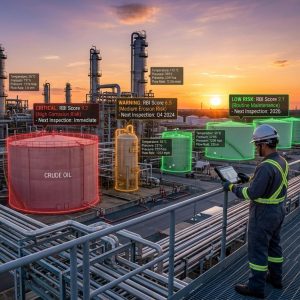
We apply the Risk-Based Inspection (RBI) methodology in accordance with API 580 and API 581 standards, combining the calculation of Probability of Failure (POF) and Consequence of Failure (COF).

The FEA simulates with high precision the three-dimensional stress state on a dent or imperfection. This makes it possible to verify whether the material is within the elastic range, thereby avoiding costly and unnecessary replacements that are permitted under the standard.

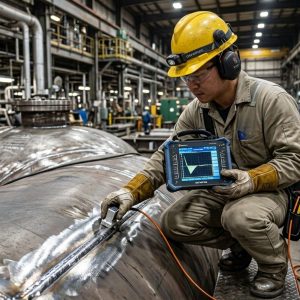
We provide the formal inspection report signed by an API 653-certified inspector, which includes calculations for minimum wall thickness, corrosion rate, projected remaining service life, and the latest date for the next internal/external inspection.

It is recommended that the HCA study be updated every 1 to 3 years, or sooner if there are significant changes in land use, urban development near the easement, or variations in the system’s operating pressure.

// Assess the operational feasibility or re-evaluate the status of your critical assets.

Get personalized guidance.

Independent judgment, broad regulatory support, and engineering focused on operational efficiency.

Business Approach and Risk Reduction

Strategies that balance maximum operational safety with budget compliance and service continuity.

Certified Specialists (API / ASME / AMPP)

Qualified technical staff and inspectors certified to the international standards required in the industrial and energy sectors.

Independent Engineering Criteria

Objective assessments focused solely on asset safety and genuine cost optimization for the client company.

Comprehensive Management of the Asset Life Cycle

From initial data collection to advanced finite element modeling and on-site support.


    This form uses Akismet to reduce spam. Learn how your data is processed.

    1