Conventional NDT

Volumetric and surface evaluation of critical components using non-destructive testing to detect discontinuities, quantify wall thinning, and ensure the operational integrity of your assets in accordance with ASME, API, and ASTM specifications.
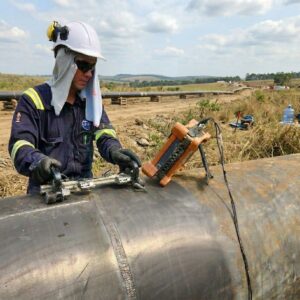
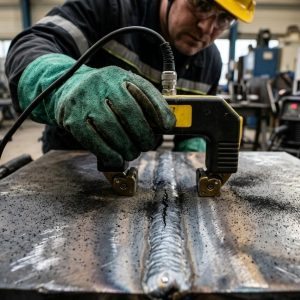
Volumetric and Surface Defect Detection

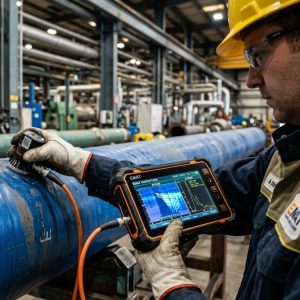
A combination of volumetric methods (ultrasound, radiography) and surface methods (magnetic particles, penetrant dyes) to ensure complete coverage of the component.

Real-Time Monitoring Without Interrupting Operations

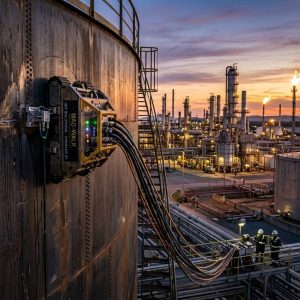
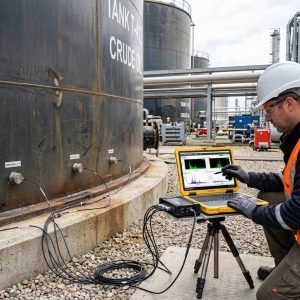
Monitoring of tanks and containers using acoustic emission, EMAT, and automated crawlers, which reduce the need for plant shutdowns and work at heights.

Digital Traceability and Regulatory Compliance

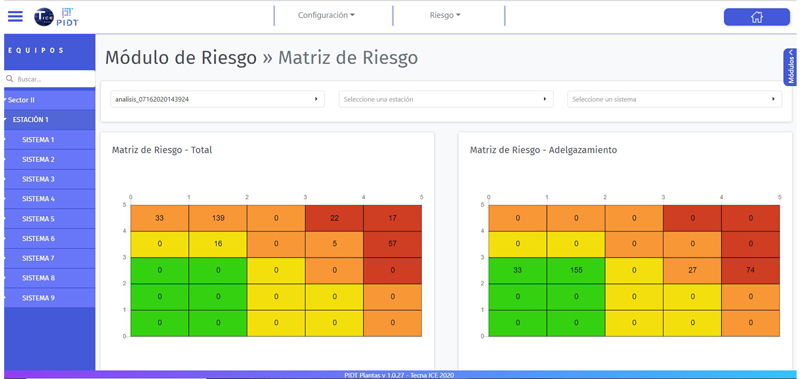
Detailed technical reports with B/C-scan records, digital radiographs, and discontinuity maps ready for audit in accordance with ASME Section V and API codes.

ASNT/ISO 9712 Level II and III Certified Personnel

Technicians and engineers with active certification to collect data, interpret readings, and issue regulatory opinions that leave no room for ambiguity.

Specialized Services in Conventional NDT and Surface Inspection

The use of standardized protocols makes it possible to identify pitting, cracks, and subsurface cracks to inform remaining life calculation plans and maintain safe operating parameters.

Certified Experience

More than 25 years of technical experience in Oil & Gas and energy across 6 Latin American countries.

Certificaciones empresa TECNA ICE
Experiencia en Evaluación y Mitigación de interferencias eléctricas en ductos | Tecnaice.
Years of experience in this service
+ 1
Projects executed
+ 1
Km of CIPS inspections
+ 1
Incident-free assessments
+ 1 mill h/m

With more than 20 years of leadership in NDT inspection and integrity engineering in Colombia, TECNA ICE has the operational capacity and certified equipment to handle plant shutdowns, construction projects, and routine maintenance.

Frequently Asked Questions

Volumetric testing methods (such as ultrasonic testing and radiography) inspect the entire thickness of the component to detect internal defects such as porosity, inclusions, or lack of penetration. Surface testing methods (magnetic particle testing and penetrant testing) are limited to identifying discontinuities that are open to the surface or immediately subsurface.

The piezoelectric sensors installed on the tank shell detect the high-frequency elastic pulses generated by rust flaking or microcracking in the loaded tank bottom. The software processes the acoustic activity to determine the extent of active corrosion without the need to empty or clean the tank.

Digital radiography eliminates the use of developing chemicals, reduces image acquisition time to seconds, and uses significantly lower radiation doses. In addition, digital images allow for contrast adjustments and zooming to enable precise measurement of defects in accordance with ASTM E2422.

  • You operate metallic pipelines parallel to high-voltage power lines or electrical substations

  • You have detected atypical variations in cathodic protection potentials

  • You need to ensure maintenance personnel safety against induced voltage risks

  • Your assets must comply with strict electrical safety and environmental regulations

EMAT is the ideal choice when the surface is very rough or has rust flakes, or when the component operates at high temperatures where traditional liquid couplers evaporate. It is also used for the rapid inspection of pipes mounted on metal supports without having to remove them.

Our team is certified under the ASNT (American Society for Nondestructive Testing) recommended practice SNT-TC-1A and ISO 9712 at Levels II and III for each of the methods we offer (UT, RT, MT, PT, AE, IRT).

Magnetic crawlers travel vertically along the tank’s shell, taking continuous wall-thickness readings. The system generates a B-scan/C-scan profile that identifies internal and external corrosion, reducing the risks associated with working at heights and scaffolding.

Acceptance criteria are defined according to the construction or inspection code applicable to the asset: ASME Section VIII, Div. 1/2 for vessels, API 1104 for pipeline systems, AWS D1.1 for steel structures, and ASME B31.3 for process piping.

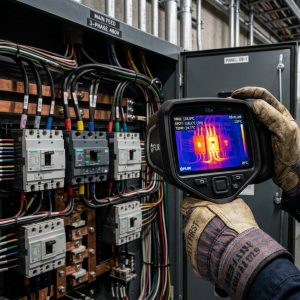
We provide an inspection report certified by a Level II/III inspector, including graphical records of the tests (A/B/C-scans, digital radiography files, thermograms), a map showing the location of indications, equipment calibration, and the technical rationale for acceptance or rejection.

// Plan your NDT inspection for your next plant shutdown or construction project

Get personalized guidance.

Strict regulatory compliance, advanced technology, and certified personnel for reliable asset evaluation.

Wide Range of Methods

Ability to integrate volumetric, surface, acoustic, and thermal methods into a single inspection day.

Level II and III Certified Staff

Inspections performed and interpreted by personnel certified under ASNT and ISO 9712 standards with extensive field experience.

Independent and Impartial Opinions

Objective assessments focused on certifying operational safety and compliance with building codes.

Calibrated and Traceable Equipment

Fault detectors, reference blocks, X-ray sources, and sensors with up-to-date calibration certificates.


    This form uses Akismet to reduce spam. Learn how your data is processed.

    1