Analysis and useful life
Advanced serviceability studies, numerical stress modeling, and root-cause analysis to predict the operational life cycle and prevent catastrophic failures.
Probabilistic failure assessment of process facilities and pipelines to direct inspection investments toward highly critical components.
Analytical and numerical calculations to assess the safe operability of degraded equipment without arbitrarily halting production.
Three-dimensional simulation of stress and strain states in elements with geometric imperfections, discontinuities, or geodynamic loads.
Structured internal (ICDA) and external (ECDA) corrosion diagnostics to validate the integrity of segments that cannot be inspected using internal tools.
We evaluate the actual impact of damage mechanisms on the pressure-bearing components of tanks, vessels, and piping, providing the technical basis necessary to extend the operational life of these assets safely and cost-effectively.
More than 25 years of technical experience in Oil & Gas and energy across 6 Latin American countries.
Our service life assessments and failure analyses provide solid technical justification for investments to boards of directors, insurers, and regulatory agencies.
Level 1 uses simplified tables and equations with conservative criteria for a quick evaluation. Level 2 uses more detailed calculation procedures with less conservatism. Level 3 requires advanced numerical analysis, such as finite element analysis (FEA), to evaluate complex geometries or severe load combinations.
It is used in pipes classified as “non-piggeable,” that is, those that lack launch/retrieval traps, have drastic changes in diameter, short-radius elbows, or valves that prevent the passage of internal inspection tools.
It allows for the identification of the failure mode (ductile, brittle, fatigue, stress-corrosion cracking), the origin of the crack, the quality of the material relative to its MTR specification, and the environmental or chemical conditions that triggered the degradation.
The FEA calculates the exact distribution of triaxial stresses in the deformed zone under cyclic loading. This makes it possible to determine whether the dent will cause fatigue microcracking or whether the structure maintains its containment capacity within the elastic limit of the steel.
Optimize inspection costs by focusing resources on the 20% of equipment that accounts for 80% of the risk. This allows you to extend inspection intervals for low-risk equipment and prevent unscheduled downtime in critical components.
Analyze the gas composition, the water and hydrocarbon dew points, the topographic profile of the line, the fluid velocity, and the flow regime to determine the areas where condensed water separates and wets the pipe wall.
Corrective and preventive actions resulting from the RCA are directly incorporated into operating policies, purchasing specifications, maintenance procedures, and risk matrices within the integrity management system to prevent recurring failures.
It is based on the recommendations of ASME B31.8S (Geotechnical Hazards section) and the PRCI (Pipeline Research Council International) guidelines for the mitigation of mass movements and the monitoring of pipeline deformation.
Evaluations based on the principles of fracture mechanics, electrochemistry, and API/ASME/NACE standards.
Finite element analysis (FEA) and direct inspection supported by specialized software.
Assessments designed to ensure safety without imposing unnecessary plant shutdowns or disproportionate cost overruns.
Partner laboratories and metallurgy specialists to support root-cause analyses presented to third parties or regulatory agencies.
Cathodic protection - Online
Juan Bermudez
Assets integrity, NDT Inspections, TECNA GPS Interrupter - Online
Diego Mendoza
Carbon Footprint, GIS, HSEQ, Process Safety, Risk, Software Dev, Technology - Online
Erika Milena Rincón
20+ años de experiencia en ingeniería y tecnología en la industria (20+ years of engineer and technology experience in the industry).
Leave your name, email and select the topics you are interested in. We will send you only relevant information, no spam.

Scan this QR code to
view TECNA ICE contacts

Start optimizing your cathodic protection system with our information, consult our experts if you require further information or advice.
Receive expert support to choose the solution that best suits your operation.
Connect with an expert and solve your technical needs accurately.
Receive expert support to choose the solution that best suits your operation.
Request a demo of our PIDT integrity software, or share your requirements. We are ready to support you
Leave us your data and your resume. We will contact you in future selection processes.
Request a quote or send us your requirements. Our technical team is ready to help you.


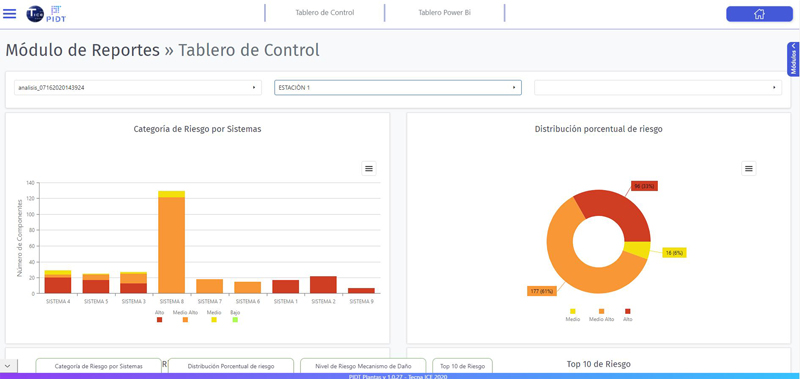
It contains the relevant KPIs to obtain a risk ranking, which are represented by means of dashboards.
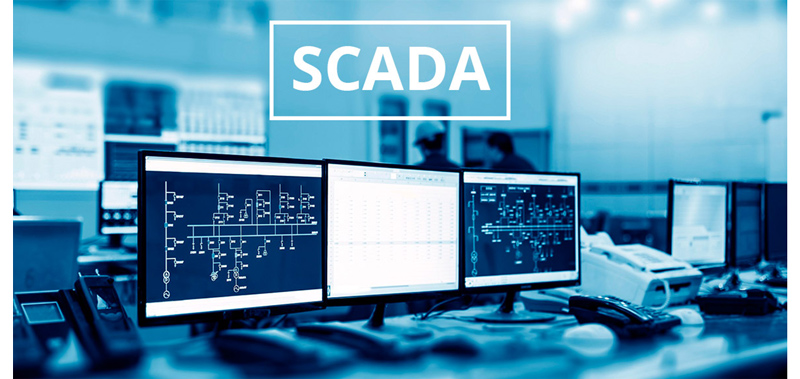
Integrates the PIDT Plants with the SCADA tool, in order to calculate the risk, making use of variables such as pressure,
temperature, flow, etc.
Bulk loading of inspections performed on static equipment, generating an inspection plan derived from RBI and sending SAP alerts.
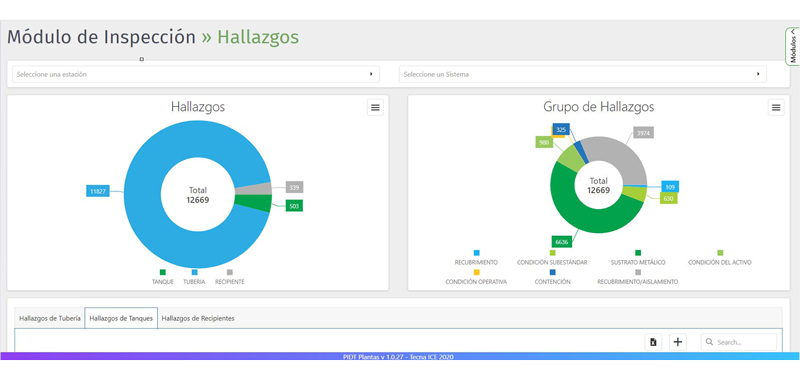
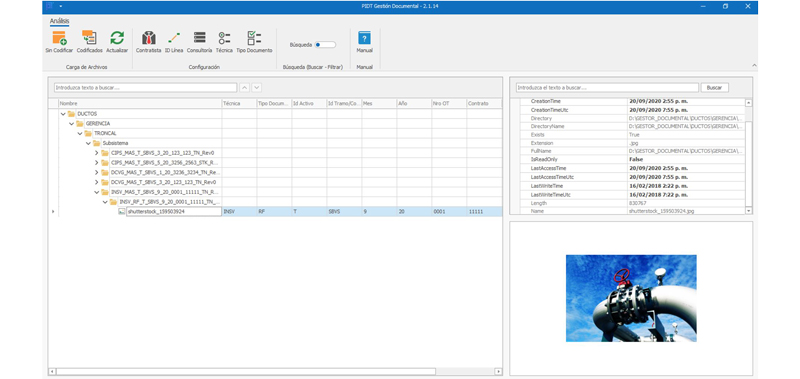
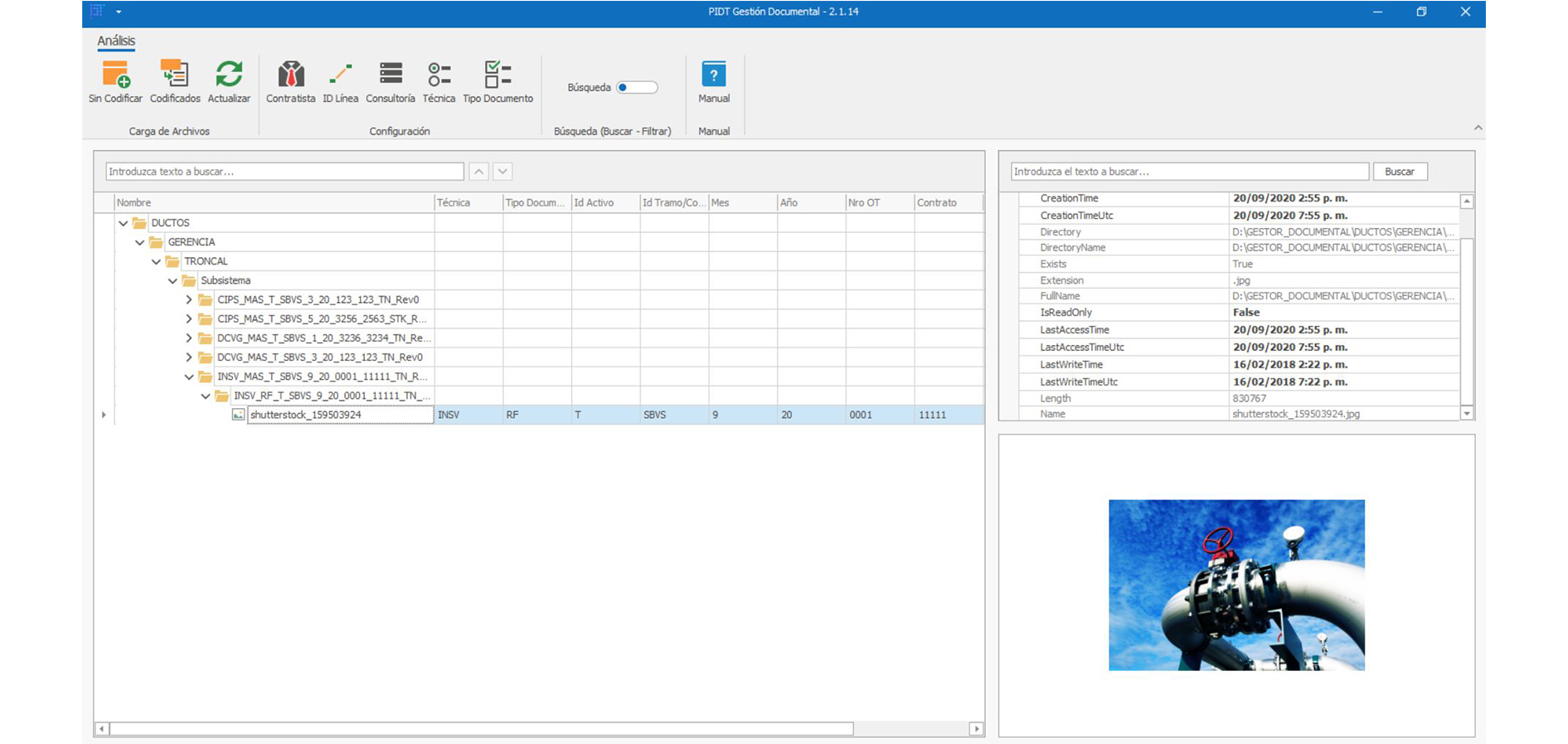
It allows the centralization and codification of the information related to the integrity of the Asset: The necessary nomenclatures are defined in order to identify each document according to its origin. Likewise, each document can be classified in relation to the process in which it is involved. It allows organizing documents by means of a hierarchical tree that enables searches and filters to quickly find documents.
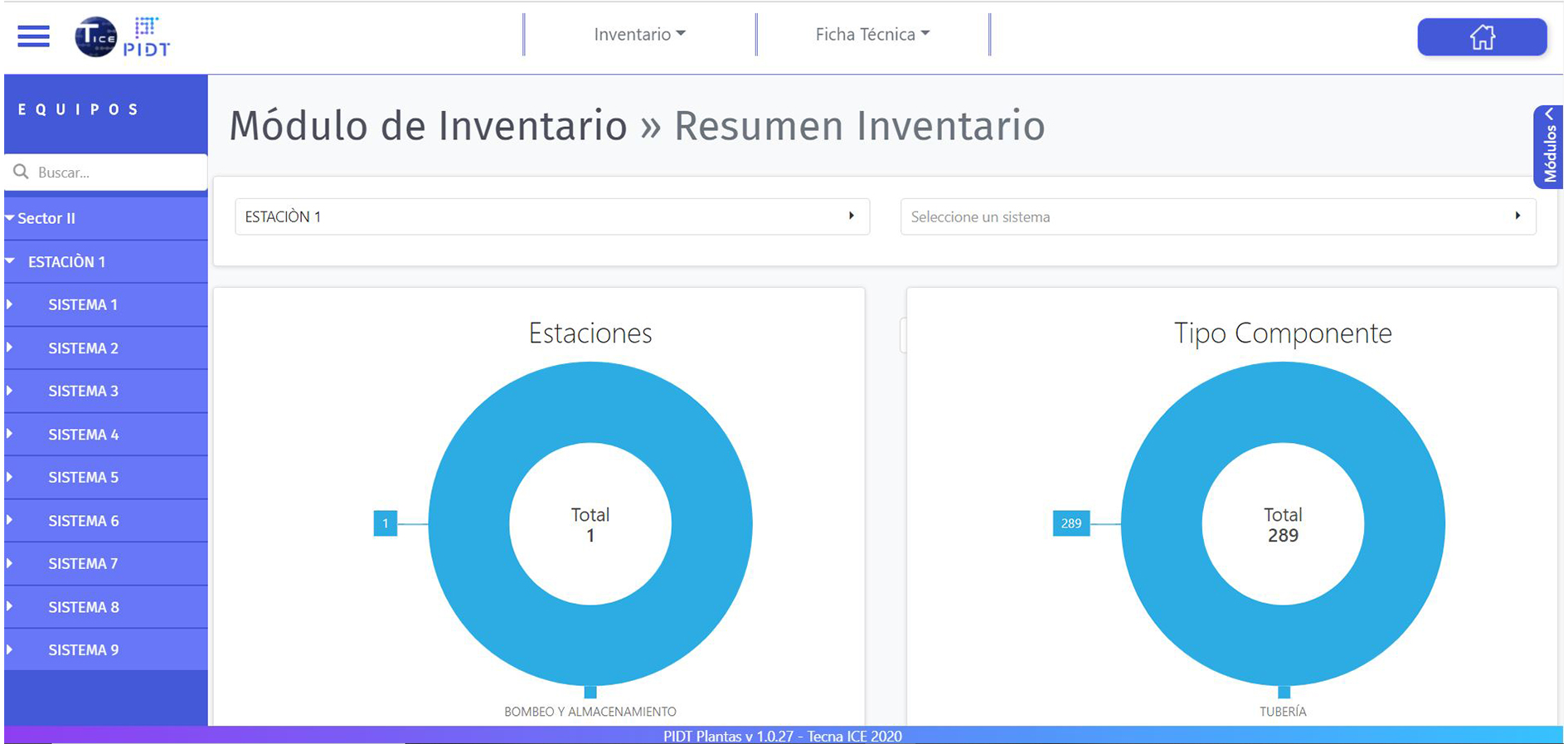
Allows the management, analysis and visualization of information compared to company targets related to:
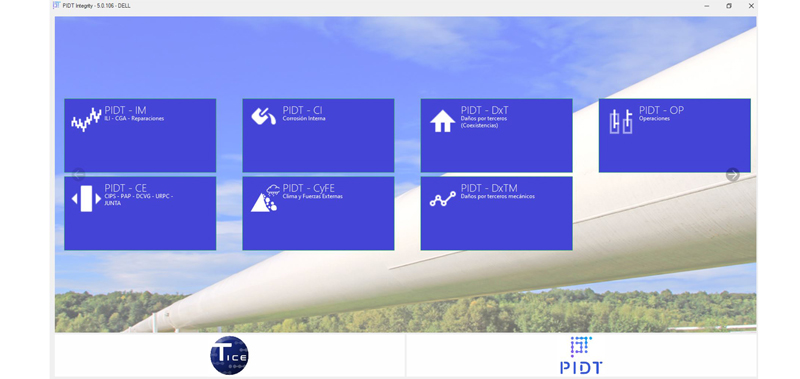
Allows the evaluation and control of modifications to the design of facilities, operation, organization or activities; prior to implementation, in order to ensure that no new elements will be introduced that increase the risk and existing hazards to the business, people or the environment based on applicable regulations.
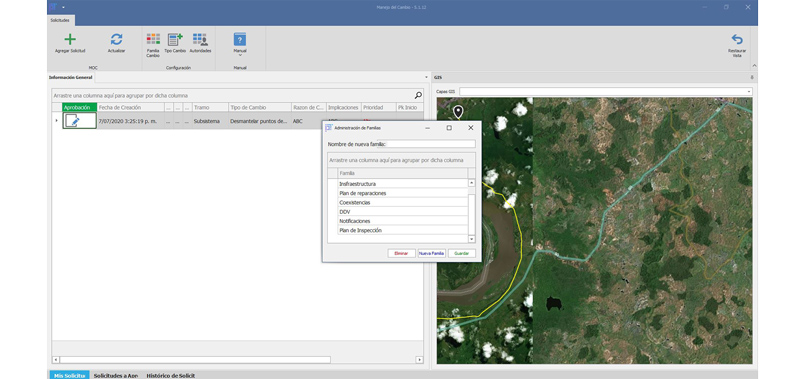
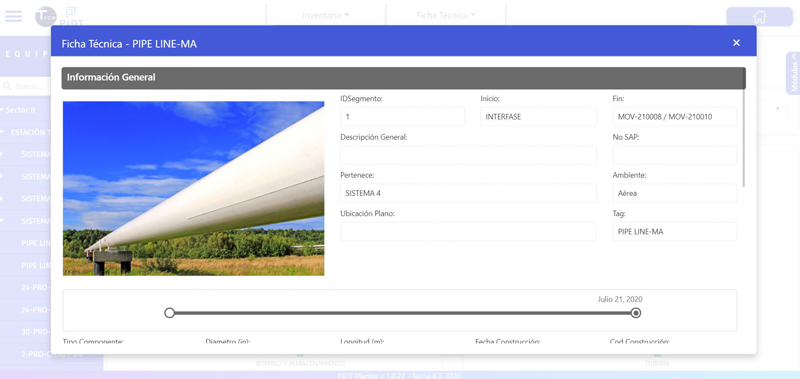
Allows the consultation of information associated with the life cycle of the asset and its accessories.
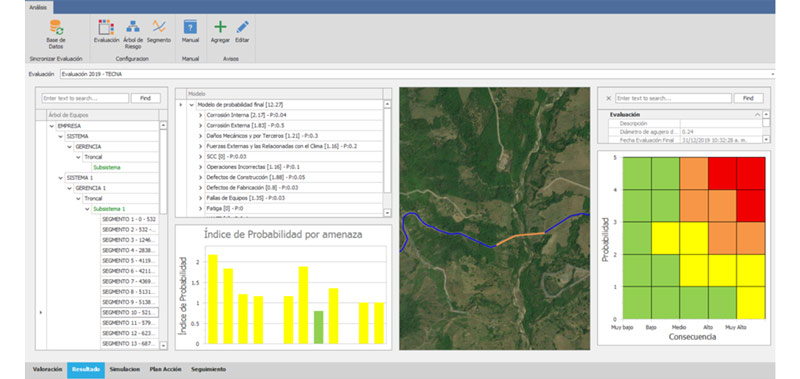
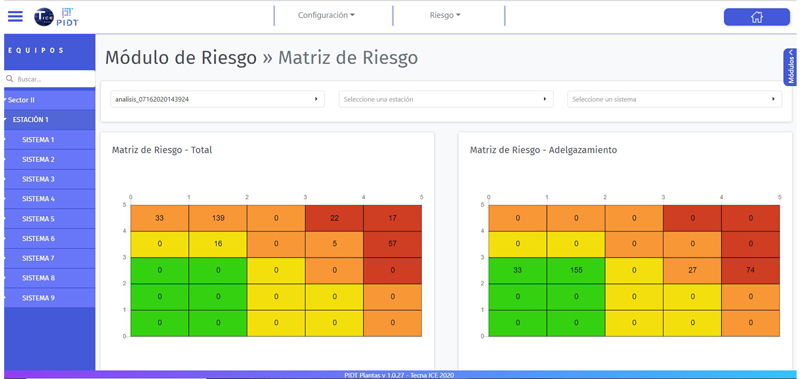
Assesses and analyzes the risk level of the Assets to generate an inspection plan. It is designed to perform the calculation and analysis of static equipment risk under the RP API 581-16 standard. The user will be able to create the required risk assessments
to generate a valuation and inspection plan.
It allows the centralization and codification of the information related to the integrity of the Asset: The necessary nomenclatures are defined in order to identify each document according to its origin. Likewise, each document can be classified in relation to the process in which it is involved. It allows organizing documents by means of a hierarchical tree that enables searches and filters to quickly find documents.