Description
The first critical step: An SPC design without an actual resistivity survey is merely an estimate. TECNA ICE captures actual resistivity at multiple depths to ensure the project’s success.
Service Description
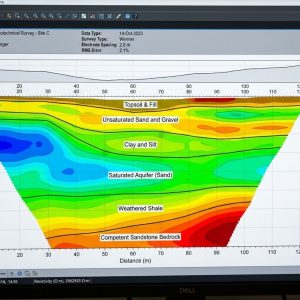
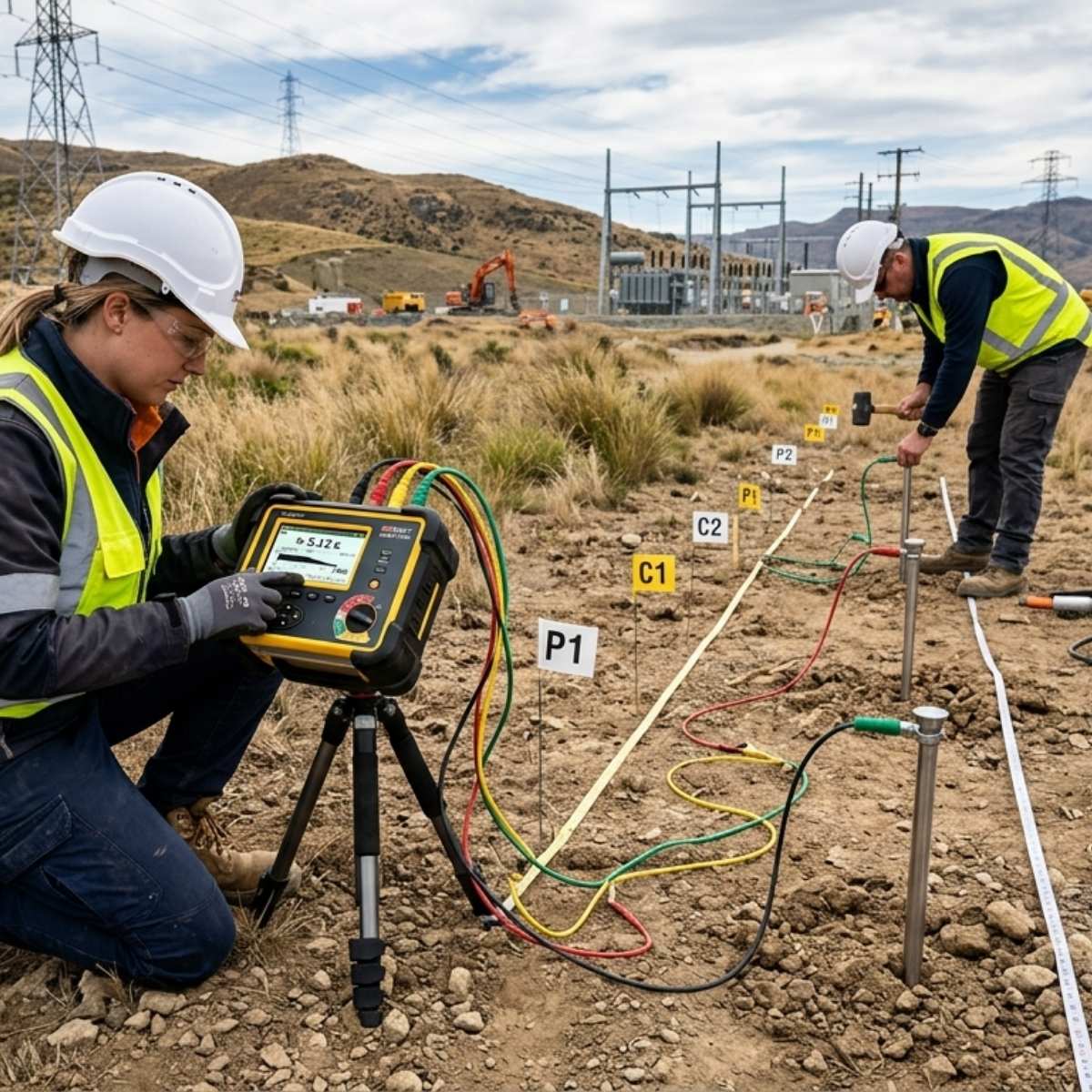
The Cathodic Protection Resistivity Survey is a fundamental technical activity within the field data collection phase for the design of Cathodic Protection Systems (CPS). Soil resistivity determines how easily the protective current will flow from the anodes to the structure. At TECNA ICE, we use the four-pole Wenner method, strictly adhering to the ASTM G57 standard. This procedure allows us to obtain apparent resistivity profiles at different depths (layers); this data is then processed using mathematical models to determine the optimal location and type of anode bed (surface or deep) required for your asset.
Field Methodology
- Wenner arrangements with variable spacing.
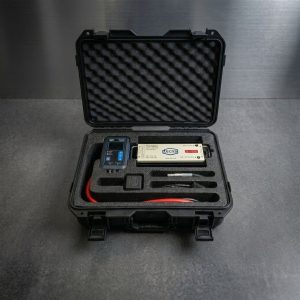
- Use of calibrated, high-precision tellurometers.
- Measurements at strategic points in the anodic drainage system.
- Identification of variations due to moisture and compaction.
Impact on Engineering
- Sizing the number of anodes.
- Calculation of the resistance of the anode bed.
- Selecting the rectifier’s output voltage.
- Optimization of material and installation costs.
Technical Consulting
TECNA ICE guarantees that resistivity data accurately reflect ground conditions. An error in collecting this data can result in a system that fails to meet protection potentials or in an unnecessarily costly overdesign. By integrating resistivity surveys into our comprehensive SPC design package, we ensure a seamless transition from the data collected in the field to the final calculation report. Our experience across diverse geographies enables us to interpret complex, stratified, or high-resistivity soils, always proposing the most robust technical solution to ensure the integrity of your infrastructure.
Why is this survey essential?
Real Calculation
Foundation for the strength formulas of Dwight and Sunde.
Location
Selecting the soil with the lowest resistivity for the anodes.
Regulations
Compliance with prerequisites for NACE/AMPP designs.
Economy
Prevent material waste caused by incorrect sizing.
Are you about to begin a cathodic protection design and need reliable soil data?
Contact us to have a resistivity survey conducted for your project.