
Description
Accuracy at Every Test Station: Post-to-post monitoring is the first line of defense against corrosion. At TECNA ICE, we transform field data into strategic insights for your assets.
Service Description
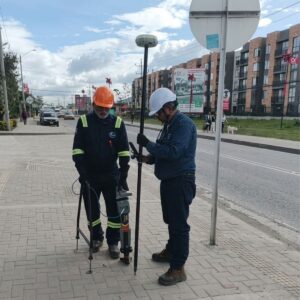
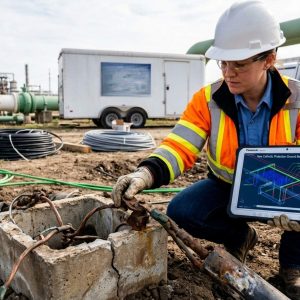
Pole-to-Pole Cathodic Protection Inspection is the systematic process of measuring structure-to-ground potentials at test stations (measurement poles) installed along a pipeline or around buried structures. This service is essential for periodically verifying that polarization levels remain within the protection criteria (such as the -850 mV On/Off criterion or the 100 mV polarization criterion) required by the NACE SP0169 standard. TECNA ICE not only collects the data but also assesses the physical condition of the test station, the integrity of the cables, and the stability of any permanent reference cells, if present.
Scope of the Survey
- Measurement of Natural, On, and Off potentials.
- Checking for electrical continuity in accessories.
- Visual inspection of the condition of the poles.
- Detection of potential local interference.
Technical Deliverables
- Georeferenced data sheets.
- Comparative Trend Analysis (Historical Data).
- Report on test stations that do not meet the criteria.
- Recommendations for Corrective Maintenance.
Technical Consulting
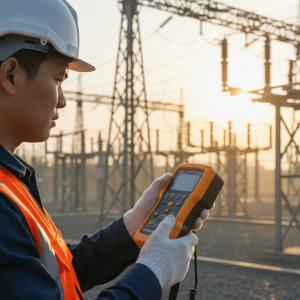
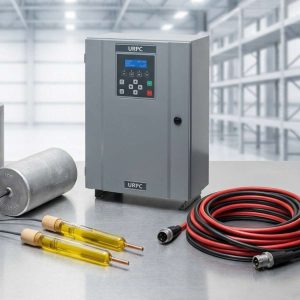
TECNA ICE ensures that every inspection complies with the strictest safety and quality protocols. We understand that an incorrect reading can lead to costly decisions or, worse yet, to overlooking an active corrosion process. That is why we use high-impedance multimeters and certified, calibrated reference cells. Our comprehensive approach allows us to determine whether a potential drop is due to a rectifier failure, damage to the coating, or a problem with the pole’s internal connection, providing a clear and timely technical response.
The Importance of Routine Monitoring
Validation
Periodic verification of the asset’s protection.
Early Warning
Rapid fault detection in the power system.
Legality
Documentation for environmental and risk audits.
Optimization
A basis for planning more detailed inspections (CIPS/DCVG).
Do you need professional and reliable monitoring of your test stations?
Contáctenos para coordinar su próxima inspección poste a poste.