
Document Management: Legal and Environmental Protection in Industry
In industrial projects, technical information is one of the most important assets for ensuring the continuity, safety, and compliance of operations. Every drawing, calculation report, technical specification, procedure, or inspection record serves as evidence of the decisions made during the course of a project.
However, records management is still often viewed as an administrative task focused solely on storing files. This view fails to recognize its true strategic value: serving as a control system that helps prevent legal, environmental, and technical risks.
In sectors such as energy, oil and gas, infrastructure, and manufacturing—where projects are subject to strict regulatory standards—having organized, up-to-date, and traceable information is essential for demonstrating compliance during audits, inspections, and with regulatory agencies.
Document Management: Beyond Information Storage
Efficient document management allows you to control the entire lifecycle of information: creation, review, approval, updating, distribution, and retention.
This means ensuring that every team involved in a project always refers to the correct version of a document and that every change is logged along with its respective approval.
When this process does not exist or is carried out manually and in a disorganized manner, risks such as the following may arise:
- Use of outdated documents during execution.
- Rework due to incorrect information.
- Difficulties in demonstrating compliance with the contract.
- Loss of evidence during audits.
- Lack of clarity regarding responsibilities and changes made.
For this reason, records management should be viewed as a tool for prevention and control, not merely as a filing process.
Traceability: The Key to Protecting Projects
One of the main benefits of proper document management is traceability. Traceability provides a complete history of a document: who created it, who reviewed it, when it was approved, what changes were made, and which version was in effect during each stage of the project.
This capability is particularly important when an organization must respond to:
- Internal or external audits.
- Audit processes.
- Regulatory agencies.
- Contractual claims.
Having clear records makes it possible to demonstrate that technical decisions were made in accordance with defined procedures and based on validated information.

Key support for environmental commitments
Industrial projects must continuously demonstrate compliance with environmental obligations, from the design phase through operation.
Permits, studies, monitoring records, technical reports, and inspection records are among the information that may be requested by environmental authorities or regulatory agencies.
A well-organized document management system ensures that these records remain available, up-to-date, and properly linked to the project, making it easier to respond to regulatory requirements and reducing risks associated with incomplete information.
The documentation thus ceases to be a historical record and becomes active evidence of the organization’s environmental compliance.
Document Management Applied to Engineering Projects
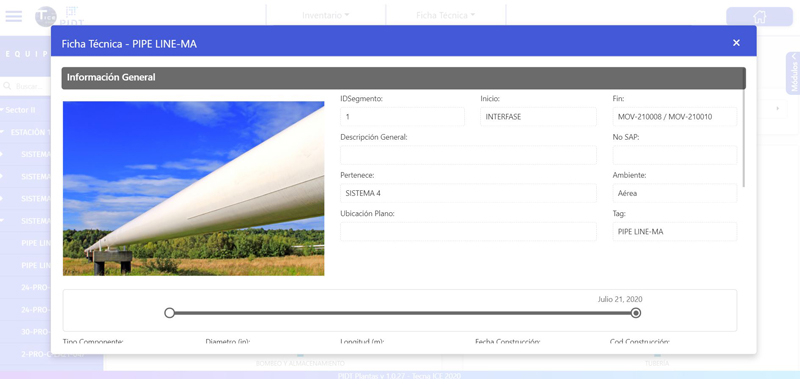
In specialized processes such as pipeline design, technical information requires a higher level of control due to the number of disciplines involved and the relationships between documents.
Drawings, P&ID diagrams, calculation reports, specifications, bills of materials, and inspection records must be kept consistent to avoid inconsistencies during implementation.
A change to a document can affect different areas of the project. For this reason, controlling versions, managing approvals, and maintaining traceability for each modification are essential to ensuring the integrity of the design.
Document management enables engineers, supervisors, contractors, and inspectors to work from a single, reliable source of information.
Digital Transformation as an Ally in Document Management
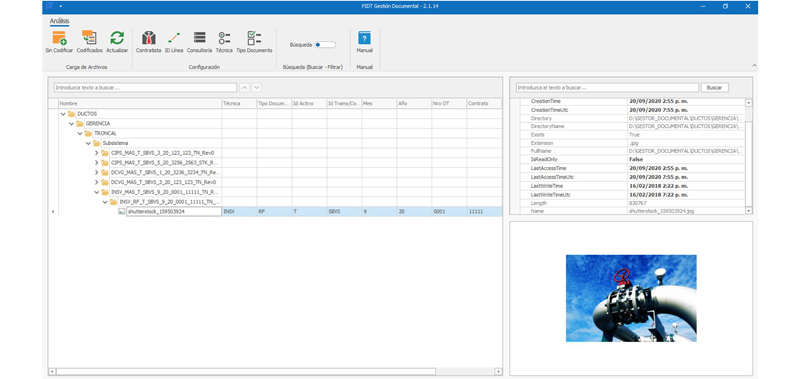
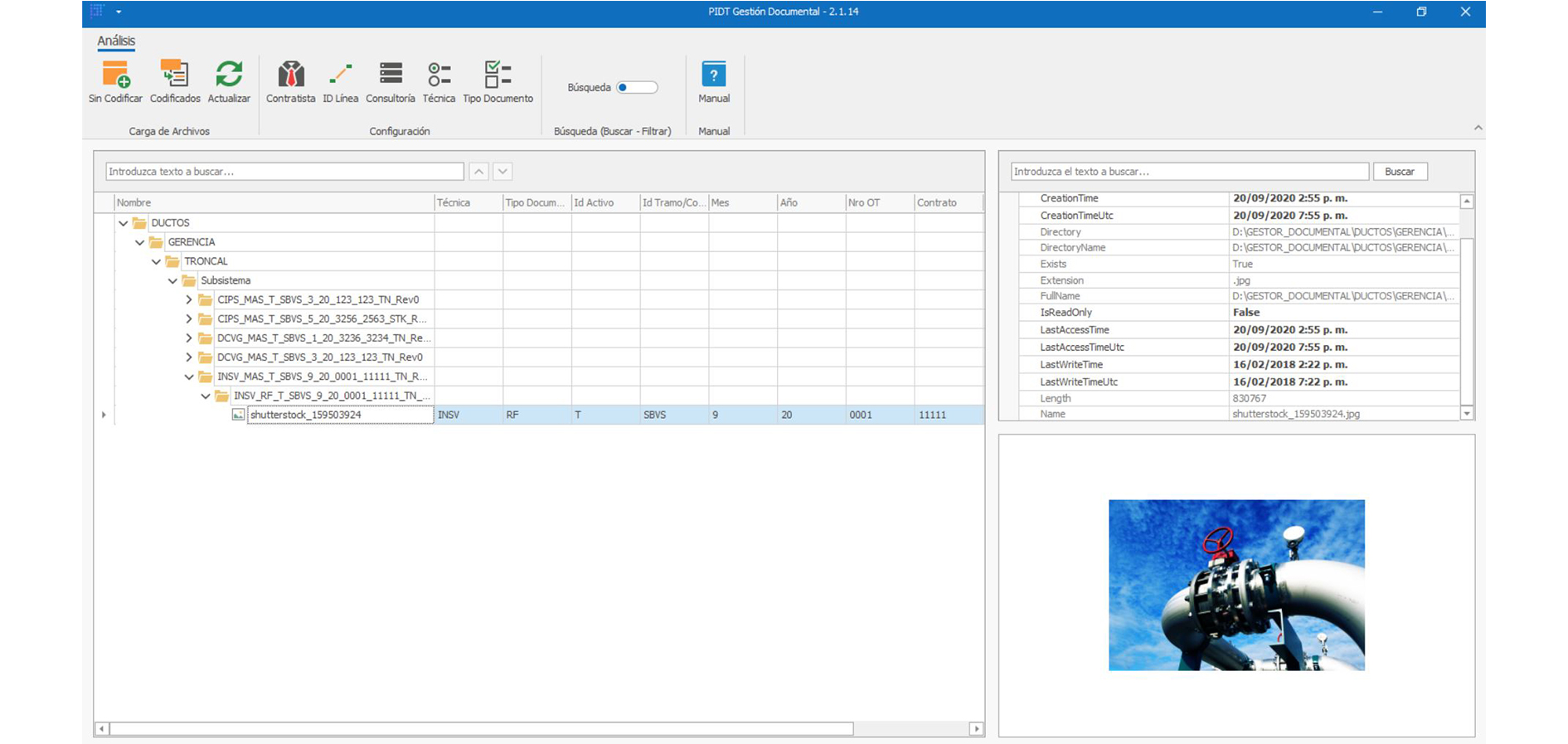
Technological advances have enabled document management to evolve from simple file repositories to intelligent platforms capable of managing entire information flows. Digital solutions facilitate:
- Automatic version control.
- Approval Tracking.
- Document Centralization.
- Quick access to information.
- Complete change history.
This improves operational efficiency and strengthens organizations’ ability to respond to situations where technical and documentary evidence is critical.
In industrial projects, information is a fundamental part of the infrastructure that enables sound decision-making, ensures operational continuity, and demonstrates compliance with commitments made.
For this reason, document management should be viewed as a strategic process that accompanies every stage of the project, from initial engineering through implementation and operation. It is not merely a matter of preserving records, but of ensuring that each document has a purpose, a history, and supporting documentation that makes it possible to understand how and why certain decisions were made.
In an environment where technical, environmental, and regulatory requirements are becoming increasingly stringent, having organized, reliable, and traceable information is key to reducing uncertainties and strengthening organizations’ ability to respond.
In short, document management is a way to protect project knowledge and transform information into a tool for building safer, more efficient, and more sustainable operations.