
Decree 1072 of 2015 on NDT campaigns: What must the contracting party be able to demonstrate when the inspection is outsourced?
Industrial Inspection: Outsourcing an NDT campaign allows for the incorporation of specialists and advanced technologies to assess the condition of an asset. However, outsourcing should not create a disconnect between technical execution and the controls of the Occupational Safety and Health Management System (SG-SST).
Decree 1072 of 2015 establishes that employers must have procedures in place to ensure compliance with occupational safety and health (OSH) standards by suppliers, contractors, their workers, and subcontractors during the activities covered by the contract.
In an NDT campaign, the practical question is:
Can the organization reconstruct what was contracted, who performed the work, under what risks and controls it was carried out, and what happened until its completion?
That is the point at which traceability ceases to be merely documentary and begins to support risk management and technical decision-making.
Before the campaign: Traceability begins with hiring
Section 2.2.4.6.27 stipulates that provisions related to the OSH Management System must be identified and evaluated within the specifications for the purchase or procurement of products and services. Section 2.2.4.6.28 extends this principle to contracting and requires that occupational safety and health be taken into account in the evaluation and selection of suppliers and contractors.
Therefore, before launching an NDT campaign, the company should be able to demonstrate, at a minimum, which occupational safety and health requirements were taken into account during the contracting process, who will carry out the activities, and how the hazards, risks, controls, and emergency measures for the area were communicated.
Key fact: six checkpoints
Article 2.2.4.6.28 addresses six particularly relevant aspects:
- Include occupational safety and health criteria in the evaluation and selection process.
- Maintain lines of communication.
- Verify enrollment in the General Occupational Risk System before the start of employment and on a regular basis.
- Report hazards, risks, high-risk activities, controls, and emergencies.
- Provide information on how to report suspected workplace accidents and occupational illnesses.
- Periodically verify compliance with occupational safety and health regulations during project execution.
The regulation also states that verification must take staff turnover into account. This is relevant for an inspection campaign: if an inspector or a team changes, traceability should make it possible to identify who was on site and which controls were verified prior to their involvement.
During the campaign: Does what was approved match what’s actually happening in the field?
A complete file compiled prior to the operation does not, in and of itself, prove what happened during the operation.
In practical terms, the contracting party should be able to identify:

This chain is not a format literally required by Decree 1072 of 2015. It is a best practice for traceability that makes it easier to demonstrate compliance with the controls established by the SG-SST.

After the campaign: Closing the NDT report does not necessarily close the traceability chain
NDT technologies used in integrity management can generate detailed digital information about the condition of assets. TECNA ICE, for example, offers services that include techniques such as MFL, ACFM, PAUT, TOFD, and 3D laser scanning.
But the technical findings are only part of the case file.
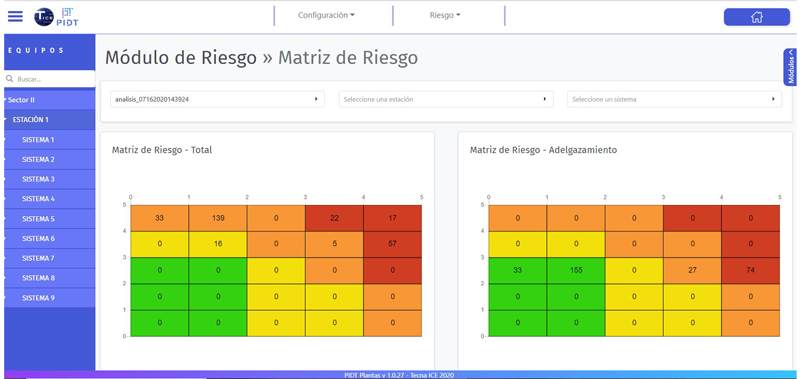
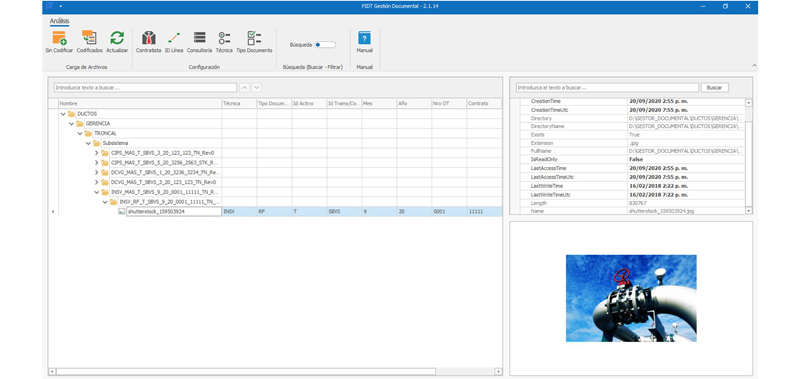
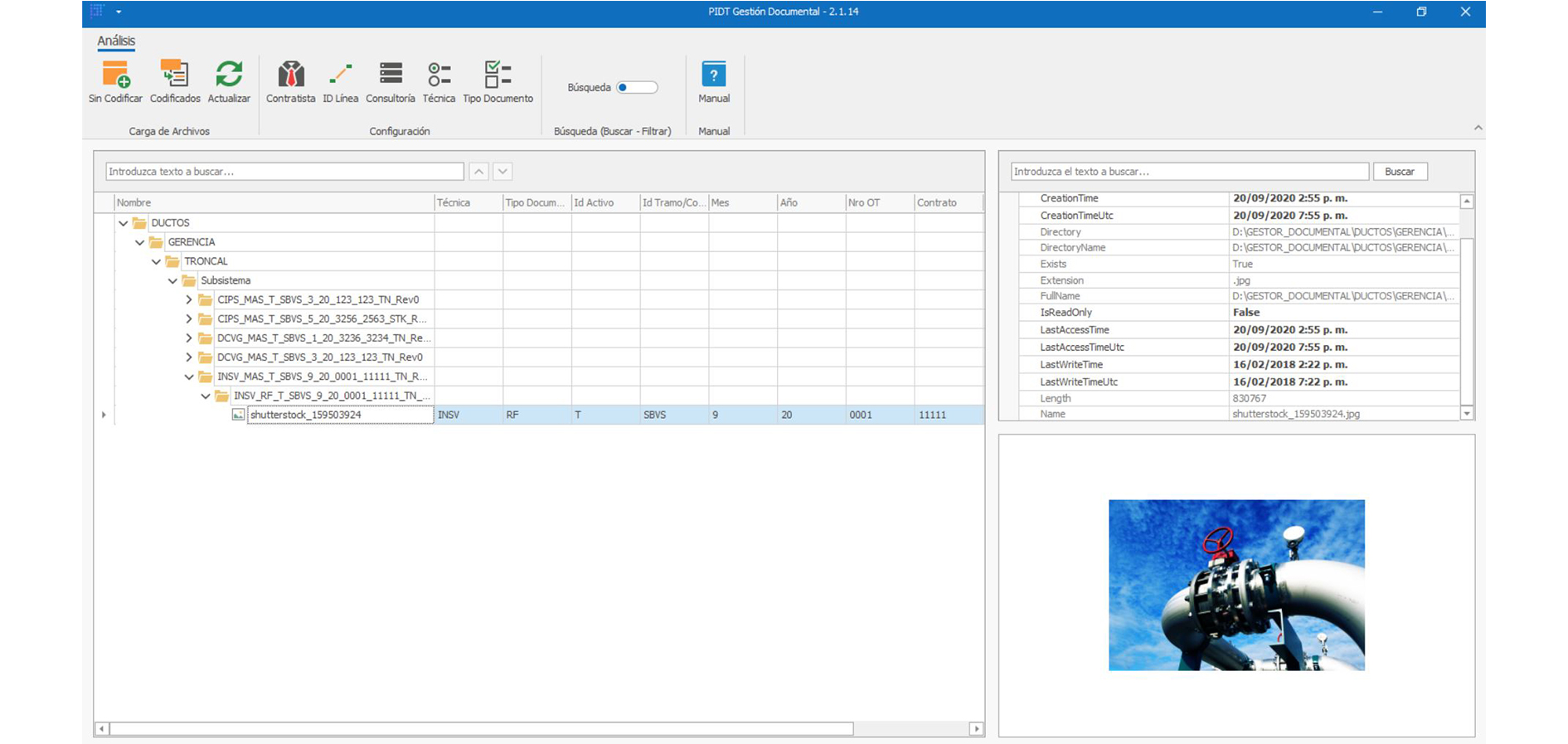
A gap can arise when Maintenance retains the NDT report, HSEQ manages verifications and deviations separately, and Purchasing maintains the contractual information without a clear relationship among them.
At the end of a campaign, the company should be able to reconstruct at least:
| Question | :Evidence that supports it |
|---|---|
| What was contracted? | Scope and Requirements |
| Who carried it out? | Staff and Crew Changes |
| How was the risk managed? | Occupational Safety and Health Information and Inspections |
| What changed? | Recording and Evaluating Change |
| What happened? | Inspections and Deviations |
| How did it end? | Report, Actions, and Closure |
This matrix represents a recommendation for traceability, not a literal list of documents established by the Decree.
From serving documents to being able to prove that they have been executed.
In an outsourced NDT campaign, having certificates, forms, and reports does not in and of itself guarantee that the complete history of the work can be reconstructed.
A question for the next NDT campaign
When the next outsourced campaign ends, select a single inspection and try to reconstruct its entire route:
Who carried it out, what risks were involved, what controls were in place, what changed during the project, what results were achieved, and how was it wrapped up?
If the response requires piecing together information from different emails, folders, or systems, there is room for improvement.
The goal is not to produce more documents. It is to ensure that the evidence already generated by the operation can be linked whenever it is necessary to demonstrate what happened.
Did you find this content useful?
Subscribe and receive technical articles, updates and more in your inbox.